

This user has not added any information to their profile yet.
PhD in Environmental Sciences and Engineering
My research advances data-driven sustainability in agri-food systems combining life-cycle assessment (LCA), circular bioeconomy pathways, and sensing/analytics to deliver decision tools and low-carbon solutions. Since 2024 I have helped secure a multi-country portfolio totaling €9.05M (with €2.47M to UCD; plus R$600k in Brazil), building partnerships across academia, industry, and government. I prioritise open, reproducible methods (automated LCA pipelines, FAIR data, reusable code), stakeholder co-design with farmers and processors, and training for early-career researchers. Sproutfull – Automated LCA & farm-level data for KPI-driven decisions (EIT-Food, 2025–2027; €927,700 total; €191,314 UCD). Delivering automated LCA workflows and farm-level data integration to support carbon, resource-efficiency and zero-waste KPIs across full value chains. Planned outputs: open methodological assets (codebooks, parameterised LCA templates), pilot dashboards for producers, and guidance for KPI reporting in industry settings. TRACE – Technological Revolution towards an Agri-food Circular Economy (PeacePlus, 2025–2029; €6.0M total; €800,000 UCD). Cross-border programme translating circular technologies into practice. My contribution focuses on harmonised impact metrics and decision-support, enabling partners to evidence GHG reduction, zero-pollution measures, and resource efficiency at scale. Outcomes include shared data standards, procurement-ready evidence, and capacity building across jurisdictions. LIGNOVALUE – Integrated strategies for lignocellulosic residue valorisation (CNPq, Brazil, 2025–2027; R$600,000 total). Strengthening South-North collaboration on waste-to-value routes. I contribute LCA and techno-environmental assessments to prioritise the most impactful valorisation strategies and to create open comparative datasets usable by policy and SMEs. FarmScan – Remote monitoring with sustainable, decomposable agri-nodes (Green ERA-Hub, 2025–2028; €1.036M total; €391,712 UCD). Co-developing biodegradable sensor nodes and analytics that feed into LCA and farm management. Impacts include field-validated sensing prototypes, open datasets linking sensor streams to environmental performance, and reproducible pipelines for data-to-decision analytics. BioPyroC – High-value bio-products from agri-food residues via pyrolysis (SEAI 23/RDD/975, 2024–2028; €1.084M total; €1.084M UCD). Integrates carbon sequestration with residues valorisation. I lead the environmental evidence base: cradle-to-grave LCA, carbon accounting, and scalability assessments, with protocols intended for open dissemination and industry uptake.
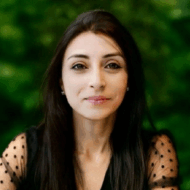
Dr Tamíris da Costa is an Assistant Professor in the UCD School of Biosystems & Food Engineering, and is Programme Director of the Grad Dip in Carbon Accounting & Life Cycle Assessment. Dr da Costa holds a Bachelor's degree in Chemical Engineering and a Master's degree in Mechanical Engineering from the Federal University of Pampa, Brazil, as well as a PhD in Environmental Sciences and Engineering from the University of Aveiro, Portugal. Her research interests encompass a wide range of interdisciplinary topics and she is committed to promoting resource efficiency, circular economy principles, and environmental sustainability in agri-food systems. Her expertise lies in utilising life cycle assessment methodology to address complex problems across different fields. She possesses a particular passion for renewable energy systems, where she investigates ways to optimise their sustainability and overall impact. Additionally, Dr da Costa is dedicated to exploring food waste valorisation strategies, aiming to transform waste into valuable resources and minimise its environmental footprint. She currently leads the national "BioPyroC" project, funded by Sustainable Energy Authority of Ireland (SEAI), which aims to develop high-value bio-based products from residual agri-food biomass through pyrolysis. At the EU level, she serves as Principal Investigator in the FarmScan project, a Green ERA-Hub initiative focused on developing biodegradable sensors for soil analysis. She has also contributed as a collaborator in several European projects, including SustainFOR, SABIOS, WAFLE, NEPTUNUS, and REAMIT.